Saturday, May 28, 2011

A Time to Remember


The photos from Joplin, Missouri look apocalyptic. Houses so completely destroyed they are just a pile of broken lumber…trees stripped of leaves and branches sheared…and cars stacked on top of each other like parts of a tinker toy set. Over 130 people were killed and many still missing. The death toll could have been even higher but the town was equipped with a warning siren that sounded 20 minutes before the tornado hit. People in this area of the country are well versed in what the siren means and found shelter in safe rooms, storm cellars, or bathrooms. The warning siren is part of the Civil Defense budget of many towns and a reminder that even in difficult times some government programs should not be cut.


The presidential race is starting to heat up. Former Arizona Governor Sarah Palin has purchased a 1.7 million dollar home in Arizona that could provide her with a convenient location to start a campaign for the Republican presidential nomination. Her bus tour of national historic sites starts this weekend, when she hopes to get the attention of vacationers as we start the summer of 2011. Texas Governor Rick Perry has also indicated he may add his name to those seeking the nomination.


Meanwhile, the President in his latest trip to Europe spoke before a joint session of the British parliament and emphasized the unique and strong relationship our two countries enjoy. This reminded me of our session with the international officer from the United Kingdom.


Modern America in a Global World


We continue to juggle schedule changes, field trips, testing and Capstone. Your latest and last individual project was your oral history interview. In order to give you flexibility, you had three weeks to complete the assignment and you had the choice of using video, recording or transcript for your final project. I have already viewed some of the final projects and they are impressive. You selected interesting people, asked well thought out questions, and learned more about historical events and time periods through the eyes of an everyday observer. Congratulations to all who met the deadlines and completed the task at hand.


If you are one of those students who did not complete the project, this is the time to reflect on what happened, why, and what you can do next time you are asked to do this type of project. For those of you going on to college or the world of work, you will find that teachers and employers will assign you a task by a certain deadline but allow you to design your own schedule. This takes time, patience and focus but it also gives you the opportunity to be a master of your own destiny.


We are also continuing with our presidential power point group projects. You have filled out a work plan, divided up the tasks and set aside time to practice. Your rubric clearly outlines what content is expected. Keep in mind we are stressing visual information…all notes can go on cards.
We finished our study of the women’s movement this week by comparing and contrasting music (Jack Jones “Wives and Lovers” with Helen Reddy “I am Woman”) and the two different candidacies of Hilary Clinton and Sarah Palin. While Clinton and Plain may not have broken through the glass ceiling, they have made the road easier for future female candidates. As voters in the next presidential election, you need to start watching and listening to the candidates so you can make an informed decision on who will best represent your needs and those of the country.


Due to a mix up with the Kennedy photo assignment, D period had additional time to finish the assignment. It will now be due May 31. Most of the other classes have started reading “A New Frontier” in our text and the one page primary source sheet on “A Grieving Nation.” Kennedy only served 1000 days but his vision of a government that tries new things while helping all nations is still with us today.


Thank You Dr. Modisett


On Friday we had the unique opportunity of hearing about Dr. Katharine Modisett’s trip to Lesotho and the work that she did in the AIDs clinic. Her photos and insights gave us a better understanding of the challenges many developing countries endure. A special thank you to AP geo students who joined us and added to the discussion. Are you ready to sign up for study abroad?


Memorial Day


On Monday we celebrate Memorial Day. This holiday originally commemorated those who lost their lives in the Civil War, but over time it has become a day to remember all who have died in service to our country, and our own loved ones. Many families take this opportunity to visit cemeteries to honor those who have gone before. You can learn a great deal about history at cemeteries as you read the markers and note the dates. One of my favorite cemeteries is the grave yard next to Saint Columba’s Chapel on Indian Avenue. The markers tell of astounding accomplishments, tragic losses, and simple lives filled with love and care for all.

Friday, May 13, 2011

Economic justice and human rights - two never ending struggles


How high will gas prices go? It was discouraging to pass by the station each morning and see the price slowly creep up penny by penny and finally reach $4.00 this week. Oil executives appeared before Congress to justify the prices and urge Congress to continue a favorable tax rate that encourages exploration. Members of Congress are feeling the heat from their constituents who are complaining bitterly about the high price of gas and the exorbitant profits (up 43% from last year) that oil companies are making. So what would you do if you were a member of Congress?


Meanwhile, the Pakistani people felt the sting of Al Qaida with a bombing that left over 80 people dead. The bombing was in retaliation for the killing of Osama bin Laden, with Al Qaida claiming the Pakistani government should have prevented the American raid that killed him. More revenge attacks are expected and many transportation facilities as well as government offices here in the US are on alert.


Oral History Project


Your major project for the quarter is your oral history project. You have the assignment sheet, the rubric and a preliminary interview sheet that must be filled in and approved before you can start your project. While you have flexible due dates, you must have the approval sheet handed in at least four days prior to the final project. Please select an event you did not experience and a person other than a parent who will be able to give you insights into how this event affected the United States. So far we have projects focused on the Civil Rights Movement, the Women’s Movement, Beatle mania, the Great Depression and the role of the gay and lesbian community.


International Speakers


Today we had our last speaker, Commander Beattie from the United Kingdom. His power point gave us an overview of the United Kingdom including geography, history, economics and culture. It was fun trying to identify the photos of the many famous Brits that concluded his presentation.


We have hosted eleven officers from around the world. I am ready to get out my passport and book the next flight. I hope you have benefited from hearing about the international community, the diversity of cultures, and the role each of these countries plays in world affairs.


Civil Rights Movement


We completed our unit on the Civil Rights Movement with an in class writing assessment. You had a choice of four questions and you had to write on one. Keep in mind that when you are asked to respond to a question, take a few minutes to brainstorm and make a list or outline. By warming up your brain, you will remember more details and end up with a richer response. Of course, your essay will be improved by using examples and citing evidence. Generalizations may give the reader an overview but specific facts and examples add strength to your writing.


Women’s Movement


This week we got the syllabus and first worksheet on the Women’s Movement. You had class time to start reading Chapter 30 and work on the questions. We did a read a-loud from “WhenEverything Changed ” by Gail Collins that spoke about the way women were viewed in the 1960s. It is amazing to read about all of the restrictions women operated under only 50 years ago. This would be a great time to talk with your Moms, Grandmothers, or Aunts about some of their experiences growing up under these restrictions and changes they may remember witnessing.


We talked about the continuing wage gap and its burden on women who are heads of households today. We looked at national figurers and Rhode Island figures and saw that women earn about 77 cents for every dollar a man earns. The Pay Equity Fairness Act has been introduced in Congress but members have been slow to act as it would cost business a great deal of money to pay men and women the same amount. We also spoke about the Wal-Mart suit that is pending. The suit claims that women at Wal-Mart do not get promoted at the same rate as men and earn less. This is a class action suit which includes all the women at Wal-Mart. Stay tuned for further action on this case.


Our worksheet also included an excerpt from a speech by Congresswoman Shirley Chisholm, who was the first African-American woman elected to Congress. She was an ardent supporter of the Equal Rights Amendment. As your text indicated, the ERA passed Congress but failed to get enough votes in the state legislatures.


We also looked at a clip on the women’s’ movement from Teacher Tube. You saw women protesting just like people did during the Civil Rights Movement. Many of the complaints women had during this time period were voiced in “The Feminine Mystique” by Betty Friedan. Some classes read excerpts from the book and had a worksheet to help them organize the reading.


While we don’t have time to watch a movie for this unit, I would recommend “Mona Lisa Smile” with Julia Roberts, Kirsten Dunst and Julia Stiles. The story takes place on the campus of a women’s college in the 1950s. Julia Roberts plays an art history professor who tries to open the minds of her students to possibilities other than becoming wives and mothers. While the film did not win any awards, it does a very good job of portraying a time when women were not expected to have careers.


NECAP Testing


Next week we have to work around NECAP testing and Junior Breakfast. Some classes will start working on a power point project on Presidents Nixon, Carter, George H. W. Bush, Clinton and George W. Bush. Most of the work will be done in class as I know you are juggling so many other demands.


Freedom Riders


PBS will be showing the award winning documentary on Monday May 16 at 9:00.


A Break from the Blog


Due to NECAP testing, Junior breakfast and travel plans, there will be no blog posting for next week.

Saturday, May 7, 2011

A terrorist defeated and the struggle for human rights goes on

This week the entire world focused on the daring and risky raid that ended in the death of Public Enemy Number One…Osama Bin Laden. After years of gathering information and putting together numerous but disparate clues, our intelligence agencies pointed to a million dollar complex located outside the capitol of Pakistan as the likely hide-out of Osama Bin Laden. The high compound walls, ringed with barbed wire, the lack of phone or internet service and the occupants’ habit of burning all trash led our analysts to believe this may be the hideout they had been looking for. While there was no certainty that Bin Laden was in the compound, all clues indicated this was our best option. President Obama made the decision to order a commando raid, rather than a bombing or missile attack, to ensure confirmation that Bin Laden was the occupant and to collect the mass of intelligence information that would be available. As we learn more and more details of the raid, conducted by Navy Seals, it seems we are watching a Hollywood movie…a night raid, a helicopter that fails, a running gun battle as they move through the compound, a woman who shields the target, and the treasure trove of computer data and files brought back for further study. This event will surely be highlighted in new textbooks.


On Friday, President Obama was back in our studies as we received a response from The White House to your letters. The package included photos and a letter to you from the President. His letter thanks you for writing to him with ideas and suggestions and urges all of you to set high standards and work hard. This is a special moment for our class…you should feel proud you were able to articulate your thoughts and the President of the United States responded. The letter will be framed and we will post it in our class. Great job!


Oral History Project


The excitement is building as you think about your project, a topic and a person to interview. You have the guidelines, the rubric and the preliminary interview sheet. The preliminary sheet should be completed as quickly as possible so your person and topic can be approved. Most classes completed the decades activity, which will help you decide what your focus will be for the oral history project. I have already had students tell me they have found a friend or relative who would speak with them on such diverse topics as Beatle mania, the Great Depression, Vietnam, and the Civil Rights Movement. You have a great deal of flexibility in this project but you must make some decisions early in the process so you have the time to put together a quality interview. Think hard about the questions you will ask and be prepared with follow-up questions.


Civil Rights Movement


We continued with our study of this movement by first looking at the diverse strategies and leaders. We had Dr. Martin Luther King at one end of the spectrum…a man who advocated nonviolent confrontation. Other leaders, such as Malcolm X and Stokely Carmichael, were discouraged by the slow progress and turned towards the threat of violence and advocating for separate black communities.


We also looked at key events including the lunch counter sit-ins, the Freedom Riders, and the Birmingham protests. We learned that publicity, including photos and television coverage, played an important role in teaching people outside the Deep South about some of the violence and humiliation African Americans experienced every day. One early attempt at integration in Georgia, the Albany Movement, failed in part because the chief of police made mass arrests but avoided scenes of dramatic violence to prevent the protestors from gathering additional sympathy and support.


We also read an excerpt from one of the most eloquent pieces of writing to come out of this movement, Dr. King’s “Letter from Birmingham Jail.” We looked at word choice and the structure of the letter to better understand how Dr. King was able to evoke such an emotional response. His use of parallelism, listing the grievances and using his 6 year old daughter, mother, and wife as examples of innocent victims, personified the suffering he described in terms any reader could understand.


You also had a quiz on the events of this time period. Your syllabus clearly indicates when you will be quizzed so please be prepared. We are doing most of our work and assessments in class this quarter so earning high quiz grades will help you meet standard.


Little Rock Nine


Of all the events within this time period, the one that speaks loudest to students is the integration of Central High School in Little Rock Arkansas. We watched a clip from a 6 hour PBS documentary “Eyes on the Prize” that highlighted this effort to have nine African American students attend what had been an all white high school. Officials at first did not think it would be a problem, but once the day arrived, a mob made up of people from all over the South formed. The Governor brought in the National Guard to keep the African American students out of the school. President Eisenhower, who had to uphold the Supreme Court ruling on integration, met with Governor Faubus in Newport and urged him to allow the students to enter. When the Governor returned to Arkansas, he replaced the National Guard with local police, again with the intent to keep the African American students from entering. It was at this point the President sent in federal troops. As one of the students, Ernie Green said, “It was a year like no other school year.” A story of courage - and to think it happened just a little over 50 years ago.


Freedom Riders


We are also celebrating the 50th anniversary of the people, both African American and white, who took the Freedom Ride from Washington DC into the deep South in an effort to get buses and bus facilities desegregated. To celebrate this event PBS will be showing a documentary on May 16. We watched a clip from the upcoming show. I would urge you to take the time to hear the stories of these riders. This is a great example of what can be learned by listening to those who witnessed history in the making.


Our Unit is ending


We are almost done with our study of the Civil Rights Movement. If you have been following your syllabus you know we have a few concluding questions on why politicians were so slow to act on civil rights legislation.


As announced, you will have an in class writing assignment on the movement. You will write on one of four questions.


The Women’s Movement


Our next unit of study will look at the women’s movement that began just as the civil rights movement was becoming successful. You will have a syllabus and we will start with a section from your text. Please bring your book to class so you can complete the assignment during the class period.


International Speaker Series


Our last speaker will be from the United Kingdom and be with us during advisory on May 13. You will be given a pass to present to your advisory teacher. As part of your final exam, you will have questions based on our series.


Mother’ Day

In 1915, President Wilson designated the second Sunday in May as Mother’s Day. Julie Ward Howe, author of “The Battle Hymn of the Republic” and a former summer resident of Portsmouth, introduced the idea of honoring mothers in 1872. Howe believed that by honoring Mothers we would also be honoring peace. Mothers play many different roles in our lives and over time our perception of these roles can change. CNN did a piece on the questions everyone should ask their mothers. They are questions well worth thinking about…here is the link so you can see the questions you may want to ask your mother or the woman you look to as a mother.

Sunday, May 1, 2011

A week of celebration and suffering


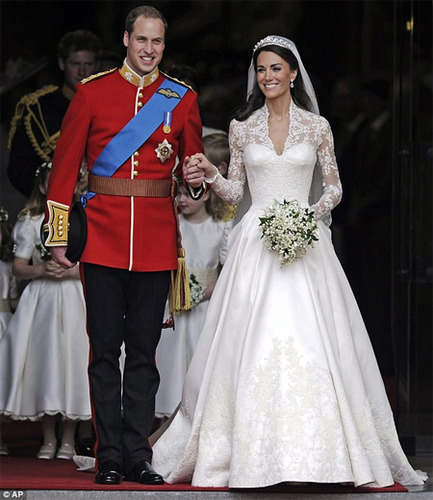
The world turned its attention this week to Westminster Abby to witness the marriage of Prince William, heir to the British throne, to Kate Middleton, a commoner whose grandfather was a coal miner. The pomp and pageantry showed the over 2 billion viewers that an appreciation for the monarchy is alive and well today. The brightly colored uniforms, the horse drawn coach, and the magnificent cavalry lent a fairy tale quality to what has been described as a “private” wedding.

Meanwhile, back in the United States our southern states were coping with horrific weather that left over 330 dead from tornadoes, while many others lost homes and businesses. Unusually warm humid air from the south met a cold front from the north and this created monster tornadoes. President Obama visited the area on Friday offering all available federal assistance to help people rebuild.

Modern American

We have continued our study of the Civil Rights Movement by watching the video “A Time for Justice” and Mrs. O’Donnell’s power point on the movement. Your video questions guided you to a better understanding of the types of oppression experienced by African-Americans and the non-violent methods they used to counter widespread hatred. You also had the opportunity to write a speech nominating a key member of the movement for a Civil Rights award. This speech-writing activity gave you time to research an individual and identify the risks he or she took to stand up against discrimination. Many risked their homes, their families and their lives as they protested for greater educational opportunities and political participation.

Working in groups and using primary sources, we read an excerpt from Brown versus Board of Education of Topeka Kansas, part of Governor Wallace’s inaugural address and a description of life at Central High by Ernie Green, one of the Little Rock Nine. By reading different points of view we could design a chart that listed reasons why some people supported segregation while others, including the Supreme Court, wanted to end the separation of the races. Some classes also had the reading from The Newport Daily News that told about President Eisenhower’s meeting with Arkansas’ Governor Faubus in Newport in August 1957 at the Eisenhower House outside Fort Adams. The President was not a supporter of integration but once the Supreme Court ruled in Brown versus Board of Education that students must go to the same schools, the President was obligated to uphold the law of the land.

After completing this activity you had your quiz. The syllabus clearly indicates when you are going to have a quiz and shows you what pages of material you need to prepare. You should all earn high grades.

Some classes started the graphic organizer on Civil Right leaders and strategies. Some leaders, such as Martin Luther King, advocated nonviolent techniques. They used sit-ins, boycotts and marches in an effort to publicize their plight and urge change. Other leaders, such as Malcolm X and Stokely Carmichael, were impatient with slow progress and threatened violence if that is what it took to gain the attention of the public. The raised black fist and posters announcing Black Power sent a different message from that of the Reverend King and his followers.

Homework versus Class work

In an effort to help you juggle the many demands on your time, an effort will be made to do most of our work in class. In order to do this you must come to class prepared with your textbook and syllabus. Don’t be a drag on your group by not having your text.

Upcoming Project

Next week you will be given your project for this quarter. You will have the opportunity to do an oral history interview with someone who has lived through an event or time period you are interested in. I have a rubric, guidelines and preliminary interview sheet ready for distribution. You will have two weeks to work on the project and you may turn in the completed work between May 16 and May 27. We will have an in class activity that will group events by decades and then we will do the math to figure out who you may want to interview. For example, if you are interested in the JFK Assassination, you need to talk to someone who is at least 55 years old. This should be fun and an interesting project that will leave a lasting impression on you and the person you interview.

Status of Assignment Sheet

For the final quarter we will once again be using the status of assignment sheet so you can track your progress. As always, you are welcome to take the folder home to show your parents your work but please return the folder to the class bin ASAP. To date, you have had three assignments that have been graded and will be returned this coming week: the video question, the Civil Rights speech and the quiz on Chapter 27 section 4 materials. We will also return to the policy of no late work.

International Speakers

Our international speakers’ series ends May 13 with a presentation on Great Britain. You will be given a pass to present to your advisory teacher. Advisory periods are now closed for much of the fourth quarter, but Mr. Ruscito has given permission for you to attend our last lecture. This has been a unique and informative trip around the world with military officers from 13 different countries. As part of your final exam, you will have a question on this speakers series. I hope you have enjoyed the series and have a greater appreciation for the diverse countries we deal with in this interconnected world.

Freedom Riders

PBS will air a documentary on May 16 celebrating the 50th anniversary of the Freedom Riders. Our video “A Time for Justice” had a brief excerpt about these brave men and women who rode interstate buses through the deep south in an effort to get the buses, waiting rooms and restaurants along the route integrated. By taking buses across state lines, the riders pushed this issue to the federal level as Congress has the power to regulate interstate commerce. If the buses had stayed within one state, state law would have prevailed and segregation would have remained the rule of the day. To end this injustice, the Freedom Riders had to get the federal government involved. So tune in May 16!

Best Wishes to Mr. Young

While Mr. Young will be around MHS for a few more days we gave him his formal farewell this week. Thanks to all who made his stay enjoyable and a true learning experience. Your patience and cooperation helped him greatly in learning how to be an effective teacher. Mr. Young has offered to stay in touch as he goes on to his next teaching assignment in France. Bon Voyage, Monsieur Young!