Friday, March 26, 2010

Witnesses to History


This week we witnessed another milestone in American history as President Obama signed the National Health Care legislation into law. Presidents as far back as Theodore Roosevelt have been pushing for some form of national health care for all, and America has long been the only developed country that did not offer this as a basic right of its citizens. The legislation will phase in over several years, but one of the immediate impacts will be to allow parents to keep their children on the family insurance plan up to the age of 26. With unemployment currently so high, this benefit will have an immediate impact on many families. Other immediate effects will be subsidies for small business owners so they can afford health coverage for their employees and an extension of drug coverage for Medicare recipients. If you are a student in CWI/Modern America, your current event, which is due on Monday, must be about this new legislation.

CWI/Modern America


This week we completed out unit on World War II by reading interviews with Rhode Island women whose economic and social lives were changed by the war. After reading the documents, you developed a thesis statement based on the prompt. This was good practice for the task you will have in the next few weeks.

We started our unit on the Cold War by watching a video on its seven phases. These covered the period from the end of World War II until the collapse of the Soviet Union (USSR) in 1991. Throughout this period, there was bitter - though usually indirect - conflict between communist countries led by the USSR and democratic countries led by the United States. I would urge you to speak with family members who lived during this period to better understand the fear and mistrust many Americans felt toward the USSR. The photo of Nikita Khrushchev, leader of the Soviet Union, banging his shoe on the podium of the UN is an image many associate with this period. Khrushchev stated “We will bury you!” and many in the West reacted with fear.


You are responsible for the vocabulary list on the board (NATO, satellite nations, Berlin Wall, 38th parallel, Ho Chi Minh, domino theory, Senator Joseph McCarthy, Warsaw Pact, Cuban Missile Crisis, Truman Doctrine, Marshall Plan, Iron Curtain, containment and arms race/space race) as well as Chapter 26 section 1 (section review 2-5) and section 2 on containment, with your worksheet. In class we read interviews with children who grew up with the threat of a nuclear attack and saw how schools tried to comfort students by staging drills. Some families even built bomb shelters in their back yards. We now look back and understand these precautions would have done little to help children survive a nuclear attack on the US.


Many students missed class this week because of field trips, so please stop by and pick up your assignments and take any missed quizzes.


Final reminder that your current event is due on Monday. You have the choice of doing it on a news article or an editorial, as long as it deals with the new health care law.


Next week we will look at the Korean War and start reading about Vietnam.


Seniors


Please pick up your senior letter which must be signed by your parent/guardian and returned. You only have about 9 weeks left and you must earn a passing grade in this class to walk the stage. It is up to you.


World History


This week we had an activity entitled “Do Photographs Lie?” based on a web site that let you explore how Stalin doctored photos to support his position and image. After looking at how Stalin modified photos to suit his purposes, we read about Michael Deaver, a member of President Reagan’s staff who was responsible for helping the President project a positive image. Mr. Deaver was a master at structuring photo opportunities that cast the President in the most favorable light. You also had to find an image of an elected official and write about the importance of image.


While it would be natural to start up once again with the study of World War II, we paused to learn about Mohandas Gandhi and his belief in changing the world through non-violent means. Your text reading gave you the background on how Great Britain treated its Indian colony and why the Indians yearned for independence. The award-winning movie, “Gandhi,” allowed us to witness the challenges Gandhi endured as he tried to move his people towards independence. Your section review and maps helped you understand the sequence of events and the importance of knowing about Hinduism. Next week, you will receive a list of quotes from Gandhi and you will be asked to write about the meaning and intent of his statements. You should be ready to hand in your guided reading questions next class.

Saturday, March 20, 2010

The Greatest Generation


CWI/Modern America

This week you presented your World War II projects. Congratulations on a great job. There were many interesting projects with great visuals. Your reflection sheet gave you the opportunity to think about your project, how you worked with your partner and to recognize those areas where you need to make changes for future projects.

One lesson we can all learn is that when working with technology you have to anticipate glitches. If you wait till the last minute to submit a project you may run into technical difficulties. Plan ahead to give yourself time to correct the problem so you can be on time.

Another important lesson is to read the rubric. Too many times students loose points because they did not go back and reread the rubric and apply it to their project. In last weeks blog, I urged you to read over the rubric as it contains all the elements that you needed to meet standard.

Finally, many of you will be doing a Capstone presentation in the next few weeks. This presentation gave you a taste of what that event will be like. Take the time to dress appropriately for the event...we had many sharp looking presenters and that shows your judges that you are taking this event seriously. Make sure you use note cards...it is professional and neat...loose leaf paper is not a good substitute. Practice, practice, practice...be comfortable with your project, know what words you want to use, pace yourself, smile and stand up tall...you should be proud of your work!

This week we also finished reading about the World War II battles of Europe and the Pacific. Your accountable talk activity on Friday gave you the opportunity to think more deeply about these events. Try to envision what it must have been like to be landing on the beaches of Normandy or fighting the tenacious Japanese in the Pacific or flying target airplanes...these people were everyday citizens...plumbers, electricians, factory workers, teachers and yet they were asked to defend our country in these far away places under the most brutal of situations...you can see why they have been called “The Greatest Generation.”

The final section in our text highlighted a turning point in history: the dropping of the atomic bomb. We are the only country in the world that has used an atomic weapon. This event changed the world and how we view the possibility of ending life on this earth as we know it with this powerful force. The citizens of Hiroshima understand this possibility and have dedicated their city to the pursuit of peace and the elimination of nuclear weapons. This goal has also been supported by President Obama. On Friday I shared with you some on my photos from my trip to this city. While I have been fortunate to see many of the splendors of the world, I must say my day in Hiroshima has made the most lasting of impressions.

Many times you are assigned sections in the text to read and them complete the section review or worksheet. It is up to you to put the time and effort into these activities if you want to earn a high quiz grade. If you copy off a partner you are not learning the material and thus your quiz grade will be low. On March 19 many of you were on a field trip so take the time to come by and makeup the work you missed that day which included a quiz on the Battle Front.

Next week we are going to practice document analysis as your next portfolio task will require you to analyze primary sources before responding to a prompt. As part of your WW II project, you were required to use a primary source so you are getting practice with these skills prior to the task. I would also like to make time to watch a few clips from “Band of Brothers.”

World History

We have finished our study of World War I and had an interesting reading from UpFront Magazine entitled “Why World War I Still Matters.” This reading focused on the conflicts of today that are directly linked to the decisions made at the peace conference: the establishment of Iraq, notification that a state for the Jewish people would be coming, and the continuing difficulties in Russia and Turkey.

You did a nice job on your World War I maps and quiz on the peace treaty. The quizzes are a great way to earn points as they are announced and you know they are based on your text readings. You need to be developing strategies to be a good text reader...you can do bold to bold notes, outlines, turn each headline into a question and then answer or you can do the section reviews. While an activity may not be assigned, you need to select a strategy that works for you. This is a sign of an independent learner.

We read a primary source reading on life under Stalin. We will continue to use primary sources so you can become more comfortable using documents and making your own interpretations. This will serve you well as you continue with your study of history and as you attempt more graduation tasks.

And speaking of tasks...you now have your Imperialism task scores. Congratulations to all who met standard. If you did not meet standard, take the time to read over the comments. A strong thesis stateament that responds to the prompt is the foundation for a good essay. Make sure that you use the required number of documents in your essay. The documents should be incorporated into essay where you weave prior knowledge with your interpretation of the documents.

Reality Television and History

I just finished reading an interesting piece in The New York Times on a new reality show called Undercover Boss . The show has the boss of a company shadow a lowly employee to better understand the plight of its workers. Some of the bosses see the light and thus make changes in the working conditions but there may be business leaders who ignore the challenges and continue to focus on the bottom line. What caught my attention in the article was the link to history when the Russian people believed that “If only the czar knew of our suffering, he would do something” as well as the reference to the New Deal which provided many of the basic protections workers have today.

It is a question we have to ask ourselves...if we know of injustice or suffering what do we do about it? What is our role and the role of our government in correcting inequalities?


Saturday, March 13, 2010

Looking Ahead


Sometimes the weather is not a good indication of the season we are about to enter but there are some sure signs of Spring at MHS: basketball, hockey and wrestling playoffs, baseball sign ups, Newport’s Saint Patrick’s Day Parade, and the Hawaiian dance. This is also the time that 3rd quarter interterms are sent out...yes...we only have about 12 weeks of school left this year. But it is also a time to think about what you want to accomplish as the year comes to an end. Are you confident your grades will earn you a spot in the college or training program of your choice? Will your grades earn you scholarship funds to help finance your next level of education? Have you participated in community service programs and contributed to the success of a club or sport team?


Spring is a great time to renew your commitment to do all that you can to be successful at the next level.


Law Day Contest


Interested in winning $1,000? Tenth and eleventh grade students are invited to enter the annual Rhode Island Law Day essay contest. The essay (up to 800 words..2-3 pages) must focus on one of the following topics: downloading copyrighted music, posting personal information on the web, or sexting. Guidelines and entry forms can obtained by emailing the RI Bar Association at fmassie@ribar.com.


CWI/Modern America


Congratulations to all of you on your letters to the President! I was so impressed with your observations, insights, and thoughtful comments. Your letters will soon be on their way to 1600 Pennsylvania Avenue.


This week we spent time in the computer lab so you could work with your partner on your World War II project. Your school email and access to the Acrobat web site give you the opportunity to continue your collaboration outside of school. If you recall, two of the challenges you had doing the Africa project were lack of access to your partner and not having PowerPoint on your computer at home. Now those two hurdles have been passed and you have the opportunity to successfully complete your project.


We did run into some learning bumps as we worked with Acrobat. One issue was how to print the slides...you can do that by going to the presentation tab and clicking “export”. The slides will be converted into pdf and then you can print.


A few helpful hints:


1. Read the rubric...read the rubric...read the rubric...
Most questions on content and presentation are in the rubric...if you have questions before Monday at 11 pm...email me or stop by room 246...


2. Google is not a source...it is a search engine...it would be like listing MHS library as a source...


3. Make sure you practice with your partner...have your note cards ready...presentations are on March 16.


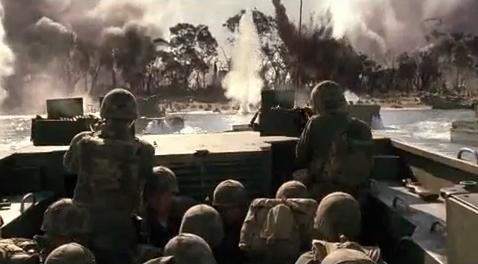
In class, we developed, with a partner, a timeline for the events of World War II. The war was fought in two major locations: Europe and the Pacific. Many of you have mentioned that you have watched “Band of Brothers” about the paratroopers who went into Normandy. It is one of my favorite history shows and hopefully we will have time to watch a small part of this miniseries. To give equal billing to the war in the Pacific, Tom Hanks and Steven Spielberg have teamed up again and on March 14, HBO will start “The Pacific.” We read a review from the New York Times in class. Many newspapers and magazines have joined in their accolades for the series, while noting that it graphically portrays the especially gruesome nature of combat in this campaign. Both miniseries are based on interviews with the men who fought in these two distinct theaters of war.


We also practiced our map reading skills before taking a quiz on the events leading up to the war. You read about the many contributions by all Americans to the war effort. Your worksheet helped you organize the information as you read. Our study of history was further enhanced by watching an ABC News clip of the women pilots of World War II who were honored in Washington this week. So many interesting stories to be discovered...if you have anyone in your family or neighborhood who fought or lived through this conflict, take the time to talk with them...ask them questions...this is history at its best!


World History


This week we scanned our Imperialism task into the computers. This task may go into your graduation portfolio if you met standard. You will also receive an in-class grade for the essay.


We continued with our study of World War I by writing about how Paul and his school friends changed during the course of the war as we watched “All Quiet on the Western Front.” How often we read about the enthusiasm of a country when it enters a conflict, and then after a few difficult months see that spirit tempered by a new understanding of what war is all about!


We also read about the causes of the Russian Revolution and Lenin’s rise to power. We talked about how economic disparity foments discontent which, if left to continue, causes people to rise up. The peasants were starving and the soldiers did not have supplies, so this led to widespread frustration. Lenin promised peace, bread and land for the peasants, and he quickly tried to deliver on all of these fronts while eliminating any competition for his position.


Next week we will talk about the objections to the peace treaty and end our study with a map assignment and a reading on “Why World War I still matters.”

Saturday, March 6, 2010

Dear Mr. President


Rhode Island remained in the national news this week as the firing of the teachers at Central Falls High School received praise from some and condemnation from others. The Rhode Island Congressional delegation met with the teachers and the superintendent and after much discussion announced that the parties would meet again to develop a corrective action plan for the school. Let’s hope that all interested parties can work together to make improvement a possibility. Now I wonder how the students will react to the new plan. Will they be part of the planning process? And will the scores go up? Should the quality of an education be based on test scores? Questions to ponder...


CWI/Modern America:


Dear Mr. President


We finished our study of The New Deal and for our final assessment from this era we are writing a letter to the President. You watched a video on how mail is handled in the White House and we read an excerpt from “FDR: The First Hundred Days” by Anthony Badger that spoke about the importance of letters in shaping how FDR viewed his role as President. Your letter is due on March 8. The letters will be collected on Monday and sent to the President. It will be interesting to see what type of response we receive. Keep in mind that you must have your MHS email account set up to complete this assignment as an email address must be on your hard copy letter, per White House rules. Follow the rubric and you should earn a high grade.


World War II


We also started our World War II partner projects this week. By now you should have developed an open ended question and had your project approved. Your rubric clearly outlines what is expected. Mrs. O’Donnell worked with you on how to use the Acrobat Web site that will allow you to collaborate with your partner. You will have March 8 and 11 in the computer lab and the final project is due March 15. Your project needs to be emailed to asullivan@mpsri.net by midnight on March 15. As the rubric indicates, please put your class period on the subject line. As we get closer to the due date, we will review the oral presentation rubric.


There will be no assigned book homework while you are working on your WW II projects. In class, you are expected to use your time wisely so you can complete the readings, section reviews and other activities. Please be prepared for quizzes.


We finished Chapter 24, section 1 on the events leading up to the entry of the United States into the war. We watched a brief video on America’s isolationism at the start of the war. FDR did not want to commit US troops to the war but he was more than willing to “lend” or “lease” war equipment to the Allies. It was only after the war reached US territory with the bombing of Pearl Harbor that the US formally declared war on Japan. Shortly afterwards Germany declared war on the US in support of its ally Japan. We also watched a brief clip on America’s entry into the war and its impact on the home front. Food was rationed, oil and rubber was scarce, and people from all walks of life bought war bonds to help finance the conflict. It makes me wonder what we are doing today on the home front to aid our troops in the conflict in Iraq and Afghanistan.


World History


This week we immersed ourselves in the early events of World War I. While most countries involved in the conflict felt that the war would be a short one, after a brutal year of fighting with little progress to show on either side, it became apparent that this would be a long and bloody conflict. The new and “improved” equipment that was developed to fight the war brought on increased destruction. Machine guns that could fire rapidly mowed down scores of soldiers at a time, poison gas that was invisible and difficult to detect burned the lungs of hundreds, and armored tanks were used to invade the best fortified sites. Our quiz on Thursday clearly demonstrated that you understand the causes of the conflict. Great job!


We started watching “All Quiet on the Western Front” based on the novel by Erich Remarque. You brought in background information on the author that allowed us to better understand the movie. Remarque, a veteran of WW I, brings a hard realism to his descriptions of the everyday events that these soldiers, or young men, endured. This is in contrast to the idealistic thoughts expressed by his teacher and proud parents back home. At the end of the movie, you will have a brief writing assignment.


For those of you who would like to see the war from a female perspective, I would recommend the movie “A Very Long Engagement.” It tells the story of five men who were court-martialed and sentenced to walk through No Man’s Land. One of the men was engaged, and it is his fiancĂ© who discovers this story and attempts to find out what actually happened to the men.


And the winner is!


There was a brief blurb in the Business section of The New York Times on the highest grossing films, and while Avatar is number one for 2010, the “Oscar” for overall highest grossing film goes to………“Gone With the Wind.” While the dollar amount is lower, once it is adjusted for inflation, this film comes in number one. Our power point on The Legacy of the New Deal featured the movie poster from this movie. You might want to consider reading the book this summer!